TL;DR
An accurate home evaluation in Calgary combines recent local sales, an in-person condition review and legal property verification. Municipal assessments and online calculators provide useful starting points, but current competition, renovations, location and buyer demand determine the price your home can realistically achieve.
The Pitfalls of Automated Valuation Models and Instant Estimates
Online calculators usually estimate value through automated valuation models, or AVMs. These systems apply statistical patterns to assessment records, historical transactions and broad property details. They can produce a quick range, but they cannot walk through your home.
Automated models cannot determine whether a kitchen was professionally remodelled or refreshed with new hardware. They cannot evaluate bathroom workmanship, natural light, layout flow or deferred maintenance. A finished basement may add appeal, yet its value depends on development quality, permits and practical use.
Location creates another blind spot. Two similar homes in one community may attract different offers because one backs onto green space while the other faces Crowchild Trail or Stoney Trail. School catchments, view corridors, traffic noise and walking access to parks can all influence buyer behaviour.
I have seen homeowners become anchored to an instant estimate that missed important interior and location differences. That creates two risks:
- Underpricing: A renovated or well-positioned property may leave equity on the table.
- Overpricing: An inflated estimate can lead to weak showings, price reductions and a stale listing.
A digital home valuation in Calgary is useful for early research. It should not support major commitments, such as purchasing another property, until local sales and the home’s condition have been reviewed.
Municipal Assessment vs. Certified Appraisal vs. CMA
These three numbers answer different questions. A tax assessment supports taxation, an appraisal addresses a defined financial or legal purpose, and a comparative market analysis helps establish a practical listing strategy.
| Valuation | Primary purpose | Key limitation |
|---|---|---|
| Municipal assessment | Property taxation | Uses mass appraisal and an earlier valuation date |
| Certified appraisal | Lending or legal evidence | Often conservative and based on completed sales |
| CMA | Current resale pricing | Quality depends on local knowledge and comparable selection |
The City uses a mass appraisal process for Calgary property valuation. Its legislated valuation date is July 1 of the prior year, while property characteristics reflect their condition as of December 31. The City’s explanation of its market value process confirms that residential assessments rely mainly on sales comparison.
Because of that timing, an assessment may lag the active resale market, serving as a baseline rather than a list price.
A certified appraisal is prepared by an independent licensed professional. Lenders commonly use it to evaluate mortgage risk. It is property-specific, but often backward-looking and conservative.
A CMA is prepared by an active REALTOR®. It considers recent verified MLS® sales, active competition, pending transactions where information is available, absorption rates and current buyer response. For most sellers, it provides the most actionable home valuation in Calgary because it connects value to the current market.
How Do You Check Your House Value in Calgary?
Start by confirming the City’s property information, then compare the assessment with current segment trends and recent neighbourhood sales. Finish by adjusting for condition, location and competing listings.
- Verify the City record. Sign into myTax using the property roll number and access code. Download the Property Detail report and check the recorded square footage, age, garage, deck, basement and other attributes.
- Confirm any errors. Incorrect square footage or missing features can weaken your baseline. The City’s myTax assessment tools also provide property, map and sales search functions.
- Track the property segment. Compare the assessment baseline with CREB trends for detached, semi-detached, row and apartment properties. This shows whether that segment has appreciated, stabilized or softened since the July 1 cutoff.
- Review community sales. Use municipal sales tools to identify similar properties. Focus on the same housing style, age, size, lot type and immediate area.
- Study active competition. Listings show what buyers can choose today, although asking prices do not prove market value.
I encourage my clients to work with a range rather than one precise figure. Calgary home values shift with inventory, financing conditions and buyer urgency. A realistic range also makes it easier to account for renovations, maintenance and micro-location differences that public records cannot fully describe.
How Much Does a Home Appraisal Cost in Calgary?
A standard residential appraisal in Calgary typically costs several hundred dollars. Fees increase for custom homes, unusual properties, large acreages and assignments requiring more research or legal documentation.
Who pays depends on why the report is ordered. A lender may arrange an appraisal during mortgage underwriting and pass along the fee. Buyers may pay as part of financing, while owners usually pay when they need an independent value for a private or legal matter.
A professional home appraisal in Calgary is rarely required to list a typical resale property. Most sellers can use a no-obligation CMA prepared by a REALTOR® who understands the community and current competition.
The two services are not interchangeable:
- Certified appraisal: A formal, independent opinion prepared for a defined purpose and intended user.
- CMA: A market-positioning analysis designed to estimate likely buyer response and guide the listing price.
Paying out of pocket for an appraisal can make sense when the value must withstand legal or institutional review. Examples include matrimonial asset division, estate probate, tax disputes and disagreements among property owners. It may also help when a home is highly unusual and comparable sales are scarce.
For a standard starter home, move-up property or downsizer purchase, I usually begin with a detailed CMA. If the circumstances require a defensible legal valuation, I recommend speaking with a qualified appraiser and lawyer about the correct report type.
Why RPRs and Bylaw Compliance Affect Your Equity
A Real Property Report, or RPR, is a legal survey prepared by an Alberta Land Surveyor. It shows visible improvements, including the house, garage, deck, fences and sheds, in relation to property boundaries, easements and rights-of-way.
The Alberta Land Surveyors’ Association provides a detailed overview of Real Property Reports and their role in property transactions. The City then reviews the RPR and may issue a Certificate of Compliance confirming whether visible improvements meet applicable municipal rules.
A new RPR for a standard residential property typically costs about $700 to $1,100. Complex properties or acreages can range from $1,100 to $2,000 or more. Calgary’s municipal compliance fee has been listed at $189, separate from the survey cost. Preparation and compliance commonly take at least 2 to 4 weeks, with longer waits possible during busy periods.
An outdated report may omit a newer deck, shed, fence or addition. If the issue appears after an offer is accepted, buyers may request a substantial holdback, title insurance or a seller-paid remedy. Encroachments can also require legal agreements, permits or physical removal.
I prefer to identify these concerns before listing. Unpermitted structures, non-compliant decks and fence encroachments create uncertainty. That uncertainty can weaken buyer confidence, reduce negotiating power and affect the final Calgary property valuation even when the house itself shows well.
Micro-Market Drivers Across Calgary Quadrants
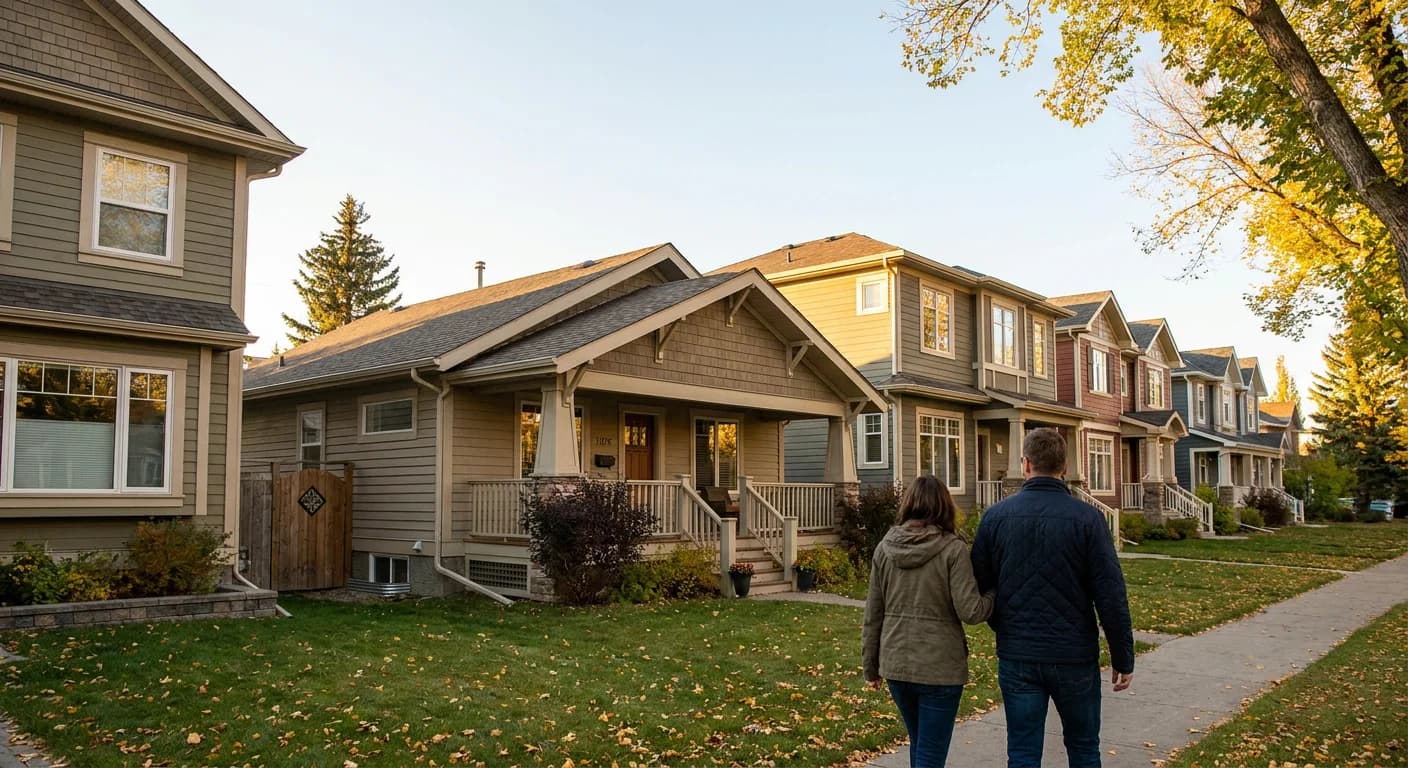
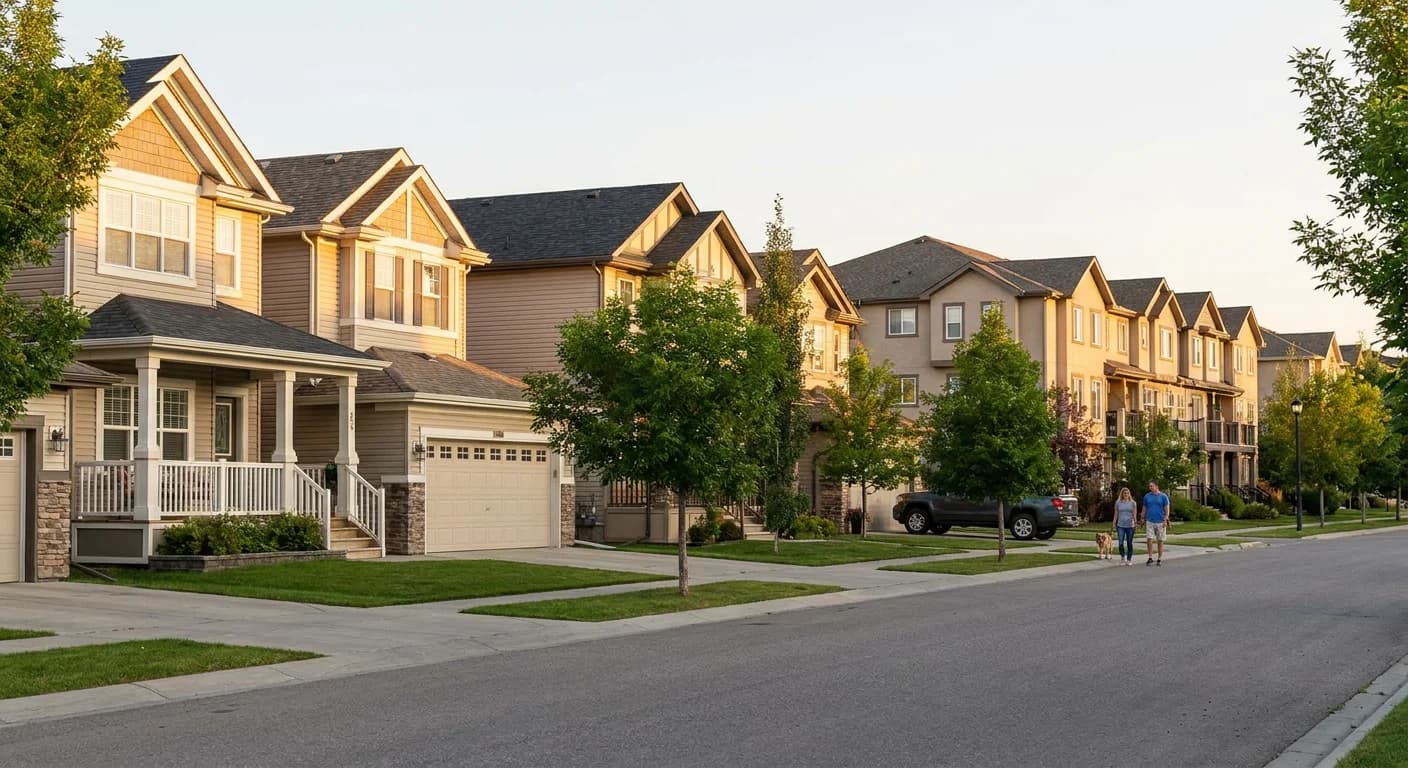
Calgary home values can change within a few blocks. Community name matters, but the lot, street and surrounding land uses often explain why adjacent properties sell in different ranges.
Topography is a good example. A walkout basement backing onto a ravine or environmental reserve may earn a premium over a flat mid-block lot. Privacy, sunlight and usable outdoor space still matter, so not every walkout is automatically more valuable.
Secondary suites can also influence a Calgary property valuation. A legal suite with appropriate permits, safe access and practical parking may appeal to buyers seeking rental income or space for extended family. An unpermitted development creates different questions about financing, insurance and future compliance. Rezoning discussions and rental demand may affect buyer interest, but they do not guarantee a fixed premium.
Transit access works both ways. Easy access to a CTrain station or bus rapid transit can improve convenience. Homes directly beside tracks, stations or major roads may face noise, headlights and traffic concerns.
Other local factors include:
- Designated public and separate school catchment boundaries
- Walking access to parks, pathways, shopping and recreation
- Orientation, views and exposure to afternoon sun
- Infill redevelopment pressure in mature inner-city communities
- Nearby construction and the quality of surrounding properties
These details are why citywide averages cannot price an individual home. Buyers evaluate the total living experience beyond bedrooms, bathrooms and square footage.
What Happens During a Professional Home Evaluation in Calgary?
A professional visit combines an in-person property review with hyper-local market analysis. I present pricing scenarios reflecting the home, current competition and the seller’s timing.
The process starts with a walkthrough. I review layout flow, natural light, room proportions and builder upgrades. I also look at visible structural condition, mechanical systems, exterior grading, windows, roofing indicators and overall maintenance.
Next, I examine the data. That includes verified closed MLS® comparables within the immediate micro-neighbourhood rather than the entire quadrant. I review active inventory, absorption rates, days on market and recent listing outcomes. Comparable homes are adjusted for meaningful differences such as lot position, garage capacity, renovations, basement development and traffic exposure.
The final step is a strategic pricing conversation. I may outline more than one approach:
- Aggressive market positioning: Designed to attract attention quickly when timing is important.
- Tested pricing: Positioned toward the upper end of a supportable range, with a clear review plan.
- Balanced pricing: Built around the strongest comparable evidence and current buyer expectations.
My consultation is free, zero-pressure and focused on strategy. I connect each scenario to the homeowner’s moving timeline, expected selling costs and financial objectives. A proper home evaluation in Calgary should leave you understanding both the likely value range and the evidence behind it.
High-ROI Preparation Before Listing
The strongest pre-listing work usually improves presentation without committing to a major renovation. Neutral paint, updated light fixtures, modern cabinet hardware and professional-level cleaning can make a home feel brighter and better maintained.
Decluttering also helps buyers understand room size and storage. Outside, trim overgrown landscaping, clean walkways, repair visible damage and make the entrance welcoming. These steps can support stronger Calgary home values without the risk of an expensive capital overhaul.
Be cautious with full kitchen replacements, luxury bathroom projects and other large renovations immediately before selling. They may not recover their entire cost. Buyer preferences vary, and the project can delay your listing.
Minor deferred maintenance deserves attention because small defects can create larger doubts. Consider servicing the furnace, repairing failed caulking, fixing dripping faucets and replacing damaged switches or door hardware. A tidy mechanical room and dry, organized basement also help during inspections.
Finally, prepare a property file containing:
- Renovation permits and contractor invoices
- Appliance and mechanical warranties
- Utility and maintenance records
- The current RPR and compliance documentation
- Condominium documents, when applicable
I use this information during the home valuation process because documentation supports the story of responsible ownership. Buyers may still conduct their own due diligence, but clear records reduce uncertainty and help justify positioning the property near the upper end of its realistic market range.